

Somewhere between downloading Xcode and clicking publish, a lot of first-time app makers convince themselves that the hard part is done. However, it isn't. Just like when your bank account is opened, publishing an app doesn't make you money.
The reality is sobering. Most apps earn under $500 in their first year. Without a clear monetization model - whether that's subscriptions, in-app purchases, or advertising - there's no mechanism to turn downloads into dollars. Without retention, users open the app once and disappear. Without a go-to-market strategy, even a well-built product sits invisible in a store with over 1.8 million competitors.
This should not make you feel so hesitant in making your first app a success. It means that you can make any mistakes now, before you launch the app. That's what this article focuses on: how to pick the right business model for your product, validate real demand as soon as possible, and consider your app a real business as early as the beginning.

Deciding on your monetization scheme is better done in whiteboard stage and not half a year into realizing that you have a firm, horizontal line on the revenue chart. The choice of your business model determines every part of the business: the onboarding flow, the priority on features, and maybe even the customer base you'll be going after.
Different app types suit different models. Subscriptions work when users return regularly and get ongoing value, think fitness trackers or language learning apps. One-time purchases fit simple utility tools where the value is immediate and complete. Freemium drives broad adoption but requires a genuinely compelling paid tier. Ad-based revenue makes sense only with high daily volume and low user intent to pay. In-app purchases suit content-heavy or game-style apps. Service lead generation works well for local businesses using an app to capture clients.
Before settling on a model, evaluate these factors:
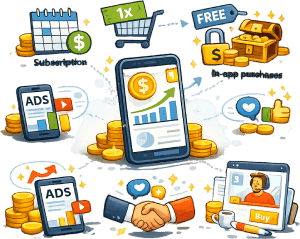
Should one's first decision about revenue model not prove successful, an exceptional product might otherwise languish. The following are six models that come with a fair degree of caution.
Run a simple landing page with a waitlist or preorder option first before spending months developing it. Any entrepreneur knows that once a company goes live, they need to make a profit to keep growing. Using LaunchRock or Unbounce, this can be done at a moderate cost. Should nobody end up on your waitlist after, say, $200, you can get enough insight for your next move to be precise and best made, exceeding a $10,000 research solicitation to earn some false absolutely. Even with 50 people, they may leave, lose all your customers or showcase important feedback that would affect your conversion rate without Beta users. Retention, churn rate, CAC, and LTV are the consideration indices, priority given to an LTV that is three times the CAC. Usually, there is little revenue to be expected from an inaugural launch day.
Rarely revenue comes by serendipity. The money-making apps are designed, generally, with a business focus instead of waiting for users to show up randomly. Classical approach is design with the central point in mind, highlighting an identified problem paying for a solution, while designing the methods to identify monetization work with that particular user group of interest. Viral spread may be rather unpredictable, but the concept of retention is the biggest secret, maintaining renders continuous iteration on refinement and benefits from lazily demanding audacious goals to guide a steady march of iteration. The profits come down to a strategic plan and discipline, with a continued pursuit of becoming better with the passage of time.